Definitions
A binary tree is a tree in which NO node can have more than two children.
It’s look like this.
No node have more than two children !!!
Other than this, there is no more difference with the tree.
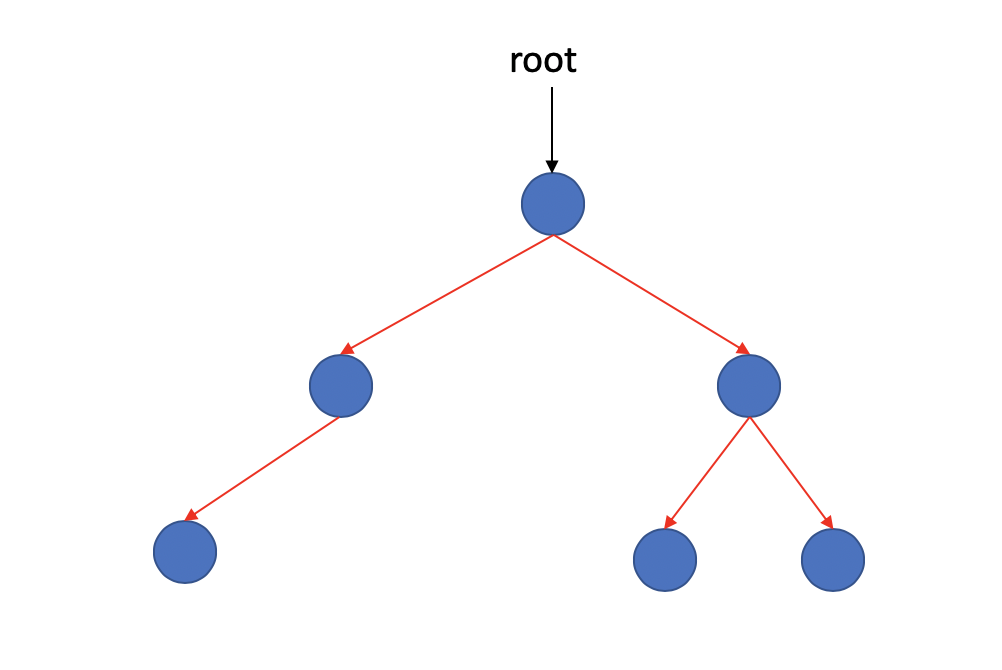
A property of a binary tree that is sometimes important is that the depth of an average binary tree is considerably smaller than N.
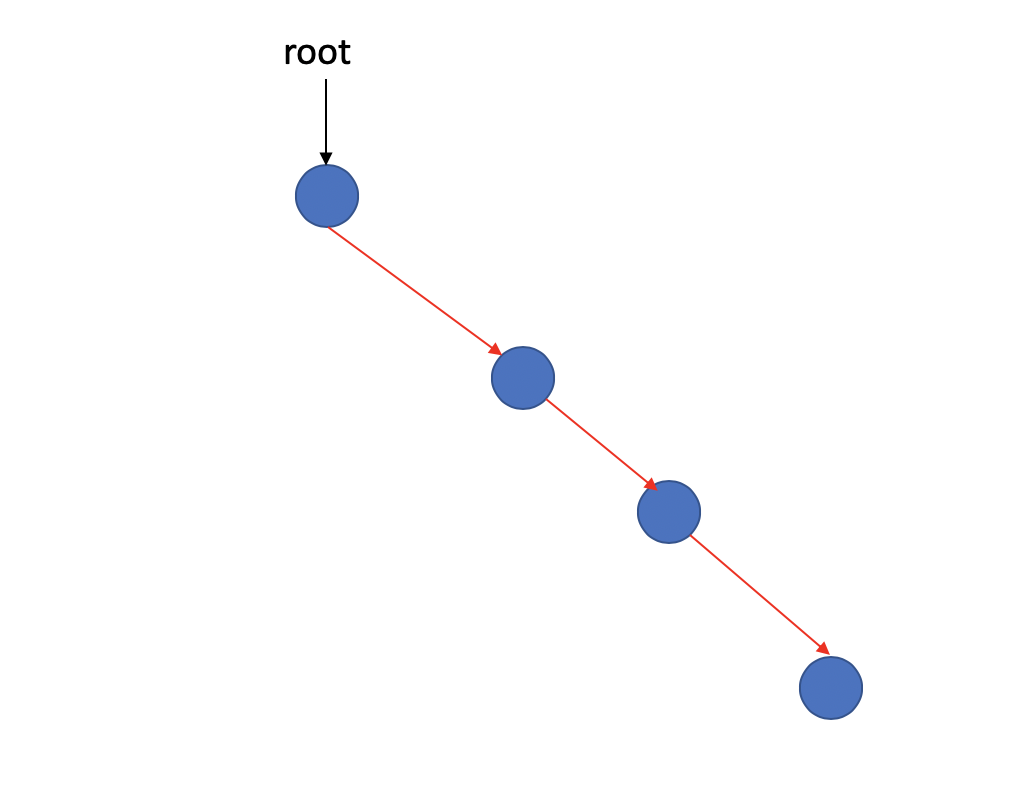
It’s the worst situation above. It becomes a linked list already. That’s not what we want.
And an analysis shows that the average depth is  , and that for a special type of binary tree, namely binary search tree. The average value of the depth is O(logN).
Operations
We just talk about traverse of a binary tree here. And we’ll do more, for example, insertion and deletion when we implement binary search tree.
Traverse
We have three ways of traversing.
inorder traversal: [left, node, right]
Means we traverse the left child of a node first, then itself, finally its right child. We do it for all nodes in the same tree until the traverse finish. Similar below.
postorder traversal: [left, right, node]
preorder traversal: [node, left, right]
In fact, we still have a way of traversing: Hierarchical traversal. It’s from top to bottom, starting from the layer of root node, from left to right, traversing all nodes layer by layer.
We’ll implement those above.
Insertion
Different binary trees have different ways of insertion. In first version, the simplest binary tree, We insert it as a complete binary tree.
Deletion
Same as insertion.
Code
The binary tree is simple and efficient. But there are many different implementations for different functions. Some implementations are relatively difficult to understand, but rest assured, I will do my best to explain clearly through the codes and documentations.
Now let’s take a look at the complete code:
1 |
|